
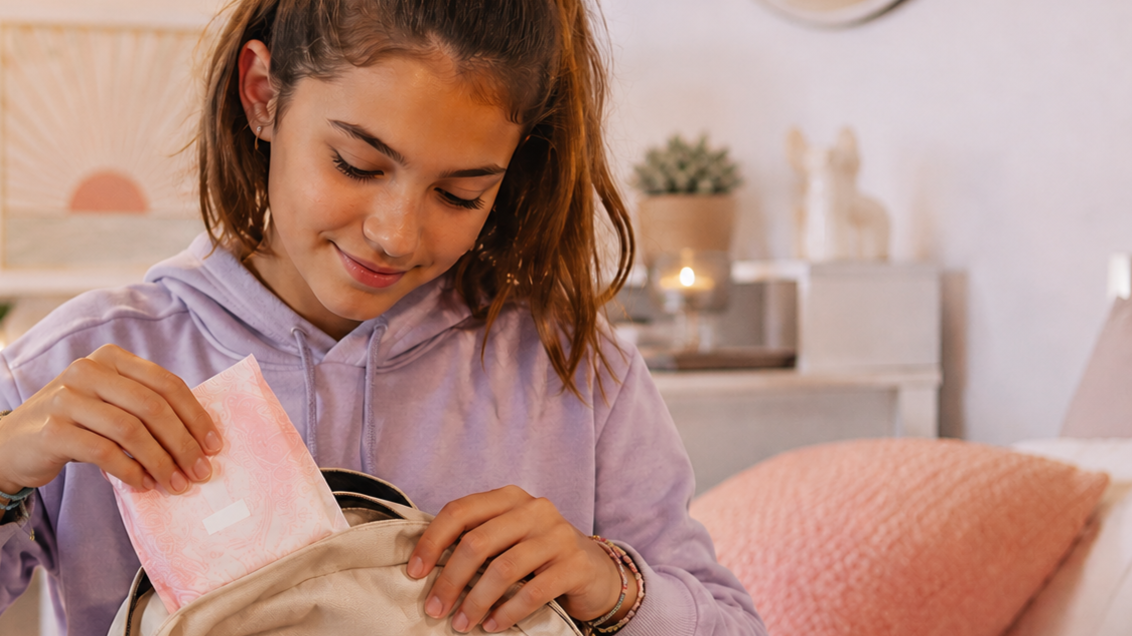
PERIOD 101
A Guide to Your First Period
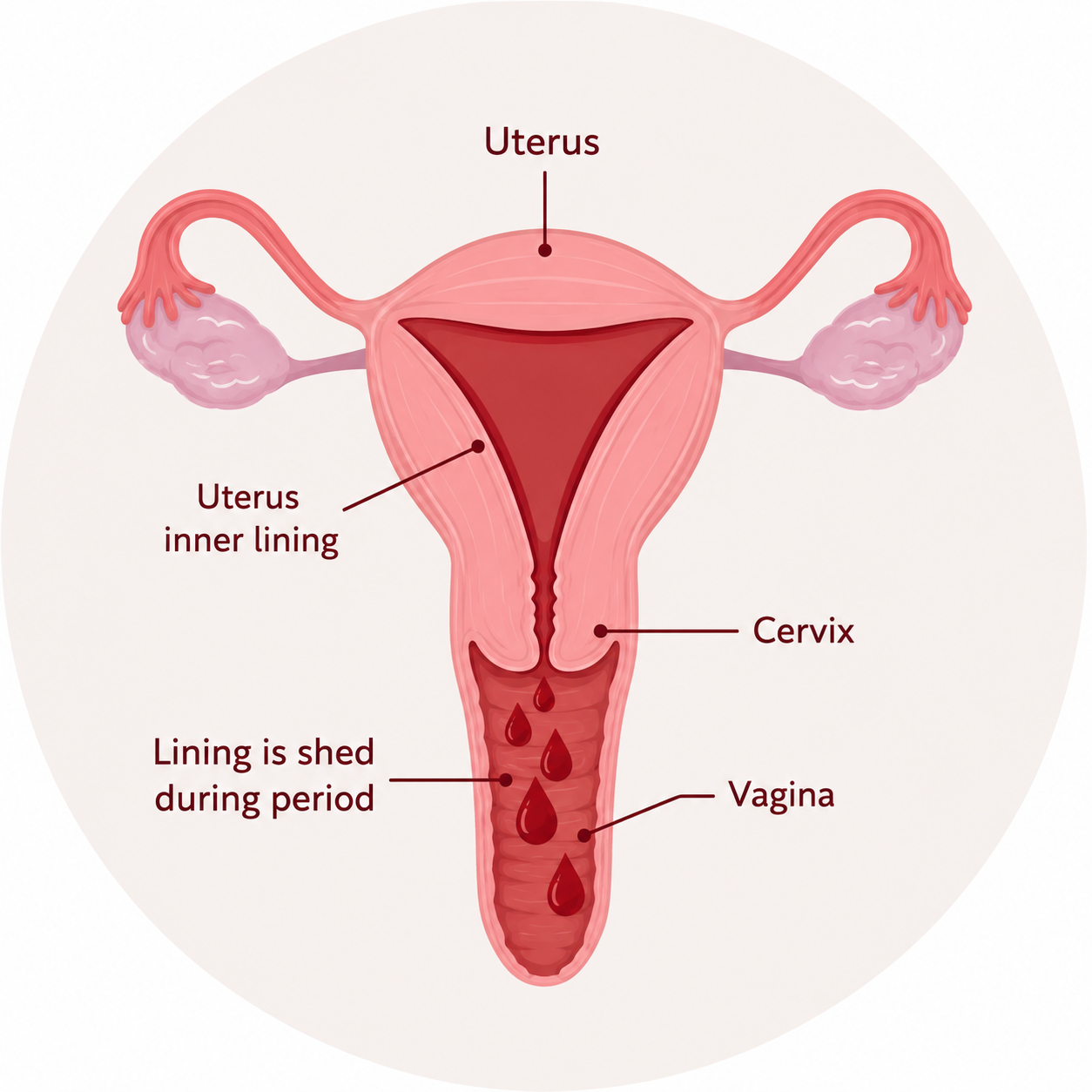
What is a Period?
Once a month, a small amount of blood and tissue leaves your body through your vagina. That's your period.¹ The blood might be bright red, pink, or even dark brown — all of those colors are completely normal.²
WHEN WILL I GET MY FIRST PERIOD?¹
Most girls get their first period between ages 9 and 14, and most commonly around age 12 or 14. There's no "right" time — your body works on its own schedule.
HOW LONG DOES IT LAST?¹
Once it starts, a period usually lasts about 3 to 7 days per month. It's often heavier during the first day or two, then gets lighter toward the end.When you first start getting your period, it might skip around. It could come one month and not the next, or show up earlier or later than you expected. Irregular periods are really common in the beginning while your body figures things out.
What will it feel like?
Everyone's experience is a little different, but during your period you might notice:
Cramps
an achy feeling in your lower belly or back
Bloating
feeling a little puffy or full
Mood changes
feeling more emotional than usual
Periods are normal — but they shouldn't be miserable. If you ever have very heavy bleeding, pain, or something that just doesn't feel right, talk to a trusted adult, your school nurse, or a healthcare provider.³
Period Products¹
Pads stick to the inside of your underwear and catch the blood.

Hygiene Tip: Change your pad every 3 to 4 hours, or sooner if it feels full.
Tampons and menstrual cups go inside your vagina.

Hygiene Tip: Tampons should be changed every 4-8 hours. Menstrual cups should be emptied every 8–12 hours
Period underwear looks like regular underwear but absorbs blood on its own.

Hygiene Tip: Change when full, or every 8–12 hours
Tips for feeling prepared
Pack a period kit. Keep a few pads or other supplies in your backpack so you're ready anywhere.
Track your period. Use a phone app or a calendar to mark when your period starts. Over time, you'll get better at knowing when to expect it.
Take care of yourself. Moving your body, getting rest, and staying hydrated can help with cramps and low energy.
FAQs
How will I know my period is coming?
1
Your body usually gives you hints. Many girls notice white or yellowish discharge in their underwear for several months before their first period — that's a normal sign it's on the way. You might also feel cramps or bloating a day or two before it starts. ³
What if I get my period at school?
2
Take a breath — this happens to almost everyone at some point. If you don't have supplies, fold up some toilet paper and place it in your underwear until you can get a pad from the school nurse, a teacher, or a friend. It might feel like a big deal in the moment, but it's something nearly every girl has been through.
How much blood will there be?
3
It might look like a lot, but the average period is only a few tablespoons of blood total — spread out over several days.²
Does the blood hurt coming out?
4
Nope. You can't actually feel the blood leaving your body. Cramps can be uncomfortable, but the bleeding itself doesn't hurt.
Can other people tell when I have my period?
5
No. Unless you tell someone, no one can tell just by looking at you.
Can I still swim, dance, or play sports?
6
Yes! You can do everything you normally do. For swimming, you'd need a tampon, menstrual cup, or period swimwear instead of a pad — but your period never has to keep you on the sidelines.
You can sleep normally. Overnight pads or period underwear are made to last through the night.
7
What about sleeping?
Is it normal that my period is different from my friend's?
8
Some periods are lighter, some are heavier, some are longer, some are shorter. Bodies are like fingerprints — no two are exactly alike. If something feels confusing or worrying, reach out to a trusted adult and/or healthcare provider. Never be afraid to ask.
Sources:
1. ACOG: https://www.acog.org/womens-health/faqs/your-changing-body-puberty-in-girls
2. Cleveland Clinic: https://my.clevelandclinic.org/health/diseases/17734-menorrhagia-heavy-menstrual-bleeding
3. Mayo Clinic: https://www.mayoclinic.org/diseases-conditions/premenstrual-syndrome/symptoms-causes/syc-20376780